
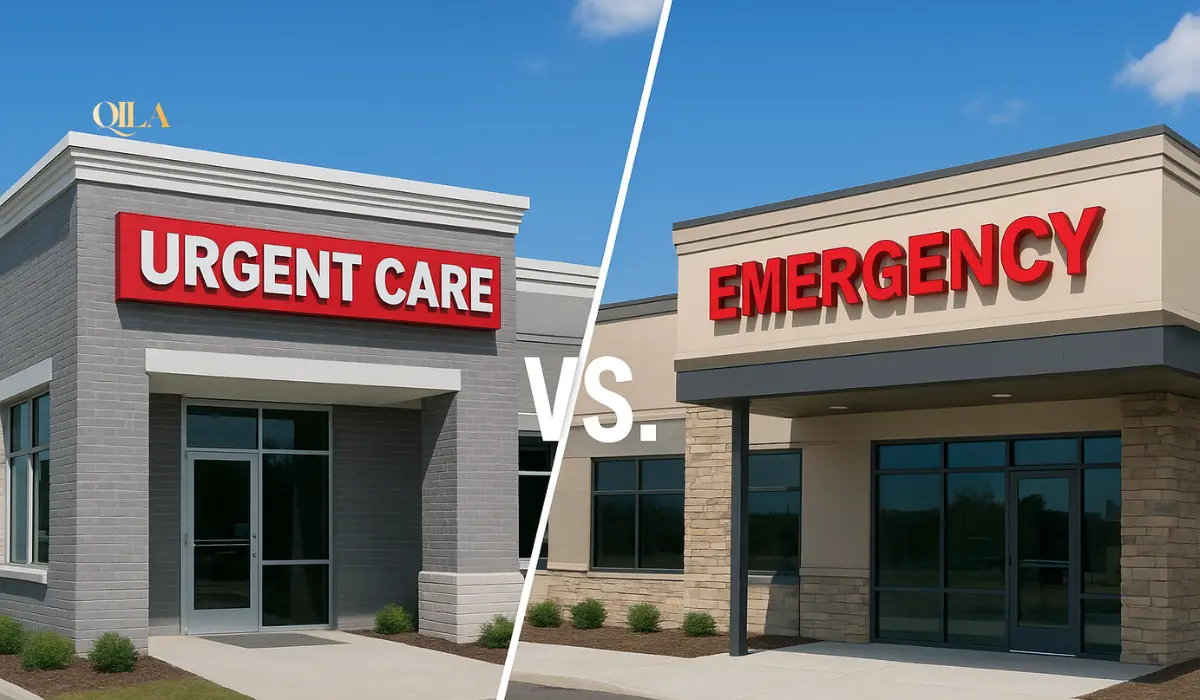
Urgent Care Centers vs. Freestanding ERs: Which Offer Better Investment Potential?
Urgent care centers and freestanding emergency rooms are both growing healthcare service models, but their economics and risk profiles differ.
For passive accredited investors, understanding reimbursement, utilization patterns, and operating structure is critical before allocating capital.
This guide compares both models across key investor factors to help determine which may fit your portfolio.
Why Healthcare Assets Are Gaining Traction
- Essential-demand services can remain resilient across cycles
- Demographic trends continue to expand care utilization
- Service-based models offer alternatives to property-only investing
What Is a Freestanding Emergency Room (FSER)?
- 24/7 emergency care outside a hospital campus
- Higher-acuity treatment capability
- Revenue model often tied to emergency-level reimbursement
What Is an Urgent Care Center?
- Walk-in outpatient care for non-life-threatening conditions
- Lower-acuity treatment and shorter visit cycles
- Convenience-driven demand with broad consumer use
Head-to-Head Comparison for Investors
1. Revenue & Reimbursement
FSERs may capture higher revenue per visit due to acuity, while urgent care centers generally rely on higher visit volume and operational efficiency.
2. Patient Volume
Urgent care often sees broader daily volume, whereas FSER demand is more episodic but linked to essential emergency needs.
3. Cost and Operational Complexity
FSER operations typically require deeper staffing and compliance infrastructure; urgent care can be leaner with lower service complexity.
4. Market Fit and Growth Potential
FSERs may perform strongly in suburban growth corridors with limited hospital access, while urgent care can scale efficiently in dense consumer-access markets.
Which Asset Offers Better Investment Potential?
- Choose urgent care for volume-driven, lower-acuity models with broad convenience demand
- Choose FSER for essential emergency-care exposure with higher-revenue-per-visit potential
- Final fit depends on operator quality, payer mix, and market-specific demand drivers
Qila Capital's Expertise in Healthcare Syndication
- Physician-led underwriting and operational diligence
- Focus on markets with durable healthcare demand
- Structured passive opportunities aligned with accredited investor goals
Final Thoughts
Both urgent care and FSER models can be attractive when matched to the right market and operator. A disciplined, data-driven approach is essential for long-term performance.
FAQs
Urgent care centers focus on lower-acuity walk-in care with higher patient volume. FSERs provide emergency-level care, usually with higher complexity, higher staffing needs, and higher potential revenue per visit.
FSERs typically have higher revenue per visit because they handle emergency-level care. Actual performance still depends on payer mix, utilization, reimbursement, and operator execution.
Not automatically. Urgent care may have lower operating complexity, but FSERs can offer stronger essential-care exposure when placed in the right market with the right operator.
Yes. Diversifying across urgent care and FSERs can balance volume-driven outpatient demand with higher-acuity emergency-care exposure.
Qila Capital should evaluate market demand, operator quality, payer mix, compliance needs, staffing model, and downside scenarios before selecting healthcare opportunities.